|
|
 |
||||||||||||||||
|
COPPER CANYON TRAIN - MEXICO |
|||||||||||||||||
|
JOURNALS BAJA
LA PAZ
MAINLAND
|
Feb 2004 THE TRAIN TO POSADA BARRANCAS The following morning, we were given the good news that the train was back on track. We headed for the train station, uncertain when the train would actually leave as it hadn't ever been on time in over 30 years! |
||||||||||||||||
|
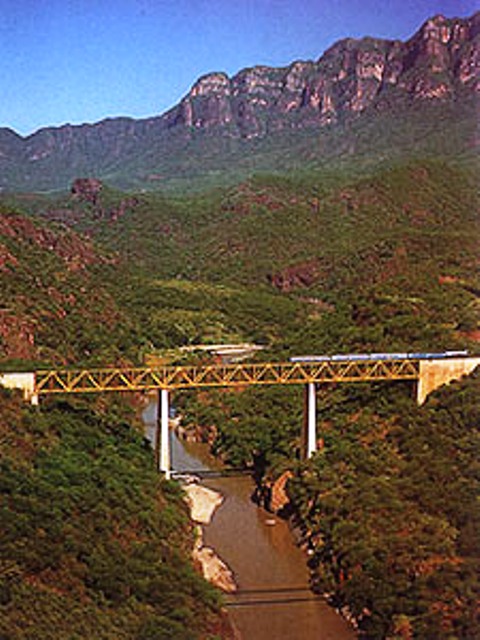
The Chihuahua al Pacifico Railroad, with construction beginning in 1898 and being completed in 1961, brought world wide attention to this last Mexican frontier. The railroad is one of the engineering wonders of the world with 99 tunnels and 37 bridges along its 941 km route. The longest bridge is 1 1/2 km, and the highest is 90 meters. |
|||||||||||||||||
|
|
|||||||||||||||||
|
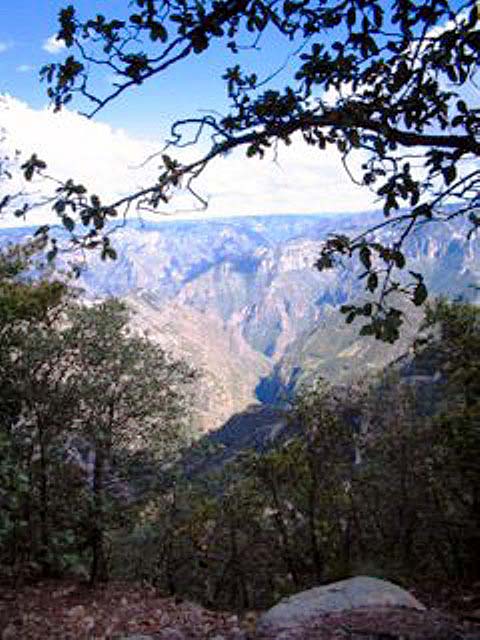
The region's geological splendor is remarkable. The Sierra Tarahumara is in fact a maze of 200 gorges which combine to form a series of six massive, interconnected canyons, or barrancas. This canyon system is four times larger than the Grand Canyon in the United States. Four of its six canyons are deeper than the Grand - some by over 1,000 feet.
A notable feature of this railroad is the train looping over itself, and a 180° turn inside solid rock. It took 90 years & $90,000,000 to complete. The vast deposits of minerals, including copper, gives the strata of the rock a colourful texture and interesting formations. An incredible variety of ecosystems further distinguish the region. Highlands are home to snow-covered mountain peaks, sparkling lakes, and enormous stands of old-growth Ponderosa pine and oak. The area's plunging gorges sprout wild rives, towering waterfalls and sub-tropical forests. Semi-arid coastal plains to the west support large sugar cane and rich vegetable farms.
The average altitude here is 2275 meters above sea level, while the highest point is 3306 meters above sea level. Volcanic activity gave rise to the great geological faults which provoked fractures in the earth's crust creating deep cracks. The result of millions of years of evolution is the great systems of these canyons.
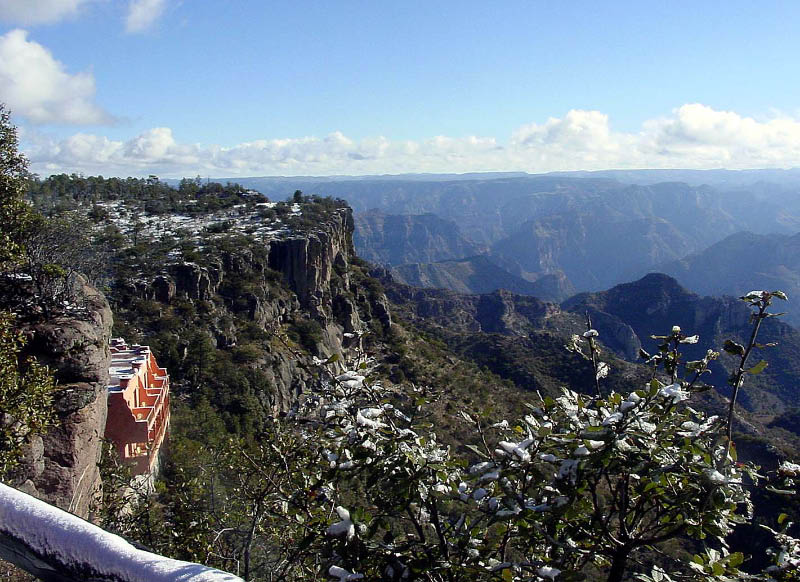
This is the view that we saw from the lobby of the hotel. A rainbow plunging into the cold canyon depths was an unexpected treat.
|
|||||||||||||||||
|
|||||||||||||||||